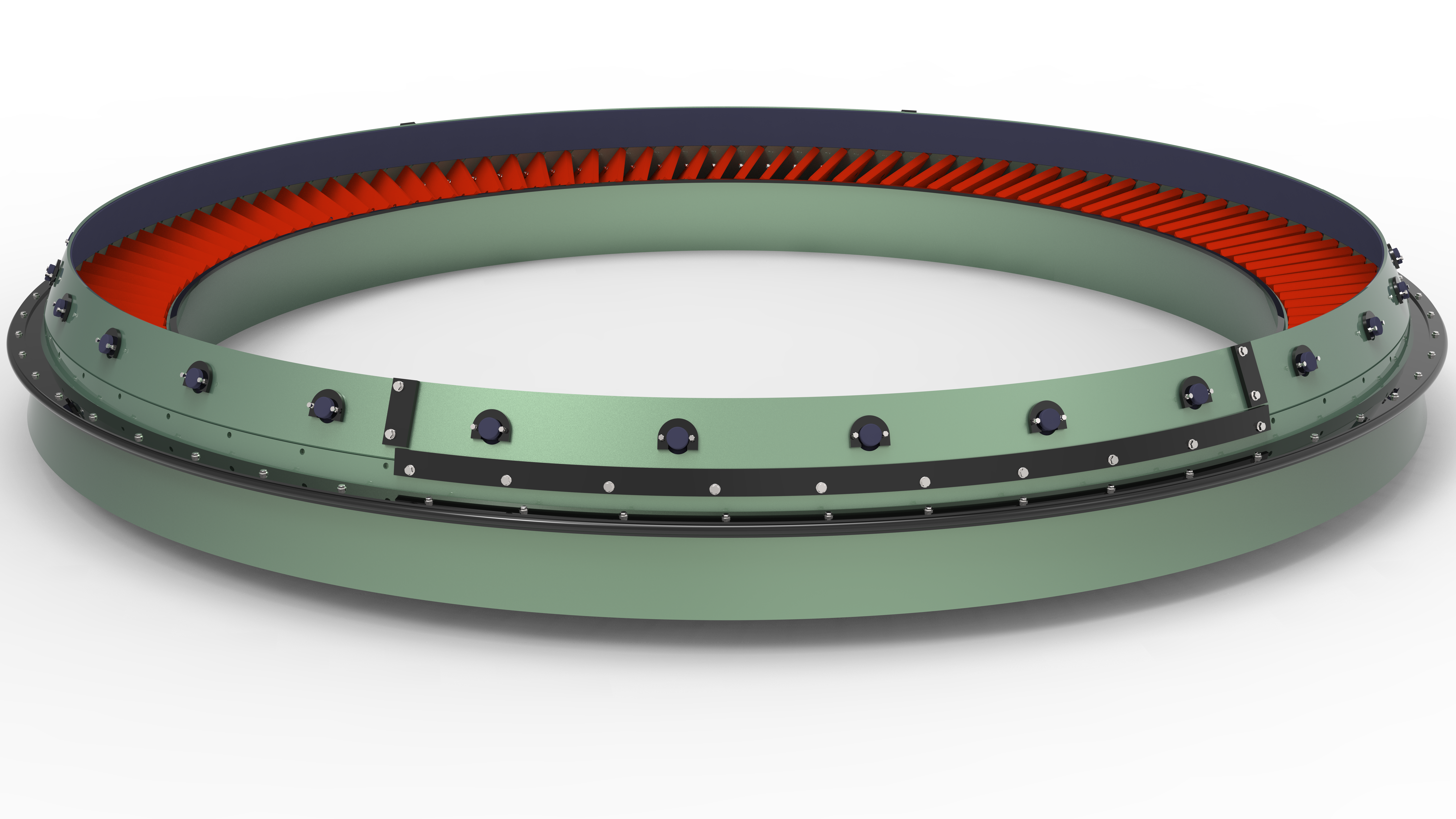
LOUVER RING
Louver Ring is designed for increased capacity and power
reduction through improved grinding efficiency. To optimize results from a vertical roller mill, uniform
gas flow distribution across the mill and classifier at any level is essential. A louver ring involves
several key steps to create a precision-engineered component used in various industrial applications,
particularly in combustion systems, such as rotary kilns or mills. Engineers initiate the process by
designing the louver ring based on specific application requirements, considering factors such as
airflow control, heat dissipation, and material compatibility.
Design considerations include the shape of louvers, the arrangement of rings, and the choice of
materials. High-quality materials are selected based on the specific requirements of the application,
often including heat-resistant alloys or castings to withstand high temperatures and harsh operating
conditions. Rigorous quality control measures are implemented throughout the manufacturing process to
ensure that the louver ring meets design standards and specifications. Inspections may include
dimensional checks, visual inspections, and material testing. The completed louver ring may undergo
functional testing to ensure proper airflow control and heat dissipation. This may include tests under
simulated operating conditions to validate performance.
