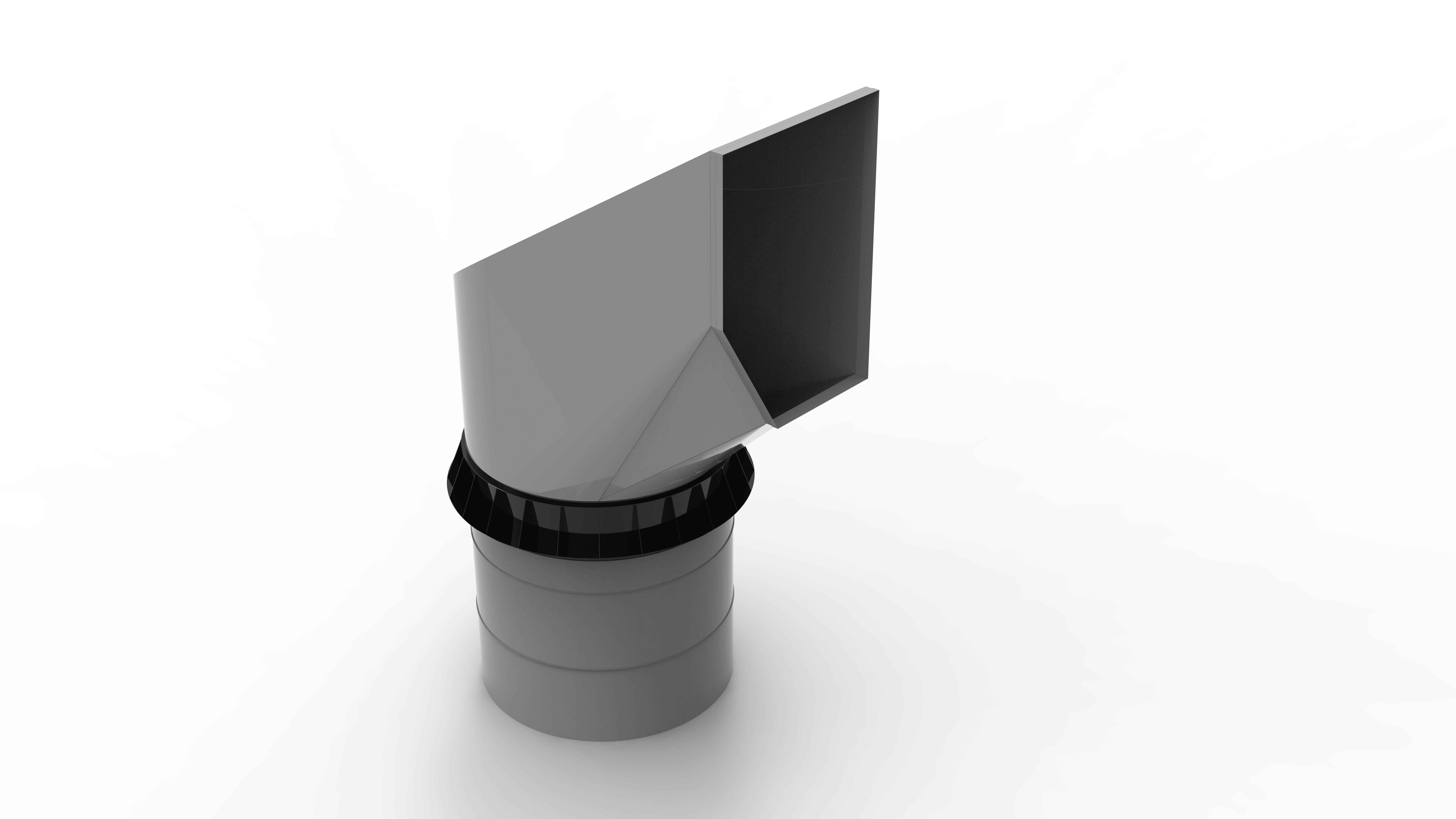
RISER DUCT
A riser duct involves a systematic approach to creating a
specialized component tailored for industrial applications, particularly in cement plants and material
processing facilities. The process begins with design and engineering, where engineers carefully
consider factors such as material flow, temperature, and structural integrity, incorporating features
like dimensions and connection points. High-quality materials, including durable alloys like carbon
steel, are then chosen. The raw materials undergo precise sheet metal cutting and shaping to achieve the
desired dimensions and strength. Flanges and connection points are integrated to align with the specific
requirements of the overall industrial process.
If needed, insulation materials are applied to the exterior to enhance energy efficiency, especially if
exposed to high temperatures. Rigorous quality control measures, including dimensional checks and weld
quality inspections, ensure compliance with design standards. A protective coating is applied for
durability, and comprehensive testing, covering aspects like airflow and temperature resistance,
verifying structural integrity and operational performance. The finished riser duct is carefully
packaged for transportation, with accompanying documentation and instructions. Manufacturers often
provide installation guidelines and support, along with maintenance recommendations to extend the duct's
lifespan. Overall, the manufacturing process is characterized by precision engineering and quality
assurance to produce a reliable and efficient component for industrial applications.
