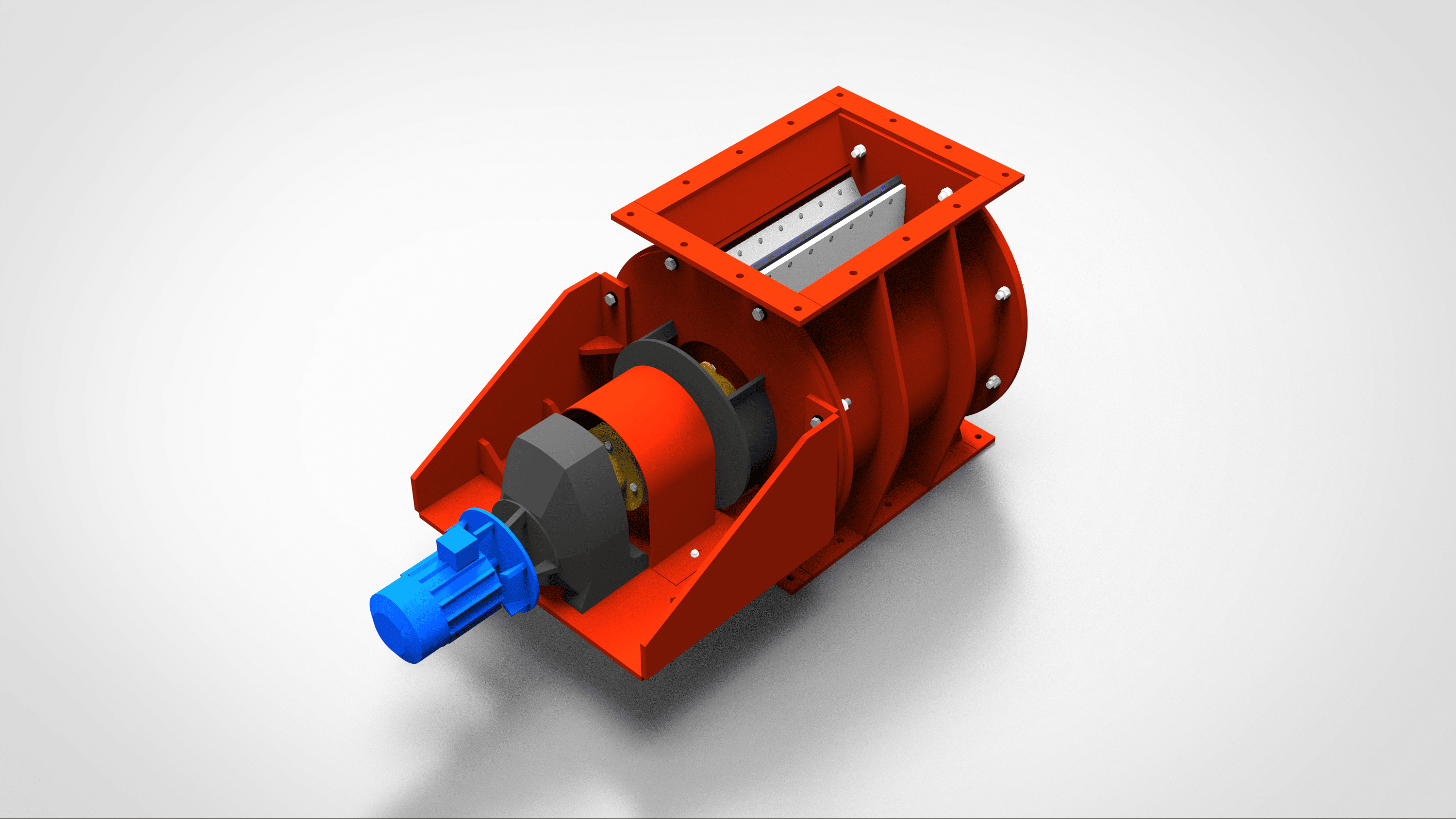
ROTARY AIR LOCK VALVE
A rotary airlock involves meticulous design, material selection, machining, fabrication, rotor manufacturing, assembly, drive system integration, finishing, quality control, testing, and packaging. The result is a precise and reliable component that plays a crucial role in controlling the flow of bulk materials in industrial processes. Engineers initiate the process by designing the rotary airlock based on specific application requirements, considering factors such as material type, flow rate, and pressure conditions. Design considerations include rotor type, sealing mechanisms, and construction materials. High-quality materials are selected based on the specific requirements of the application, often including cast iron, stainless steel, or other corrosion-resistant alloys. Rotor blades and housing components are carefully chosen for durability and resistance to wear. The rotor, a critical component of the rotary airlock, is manufactured separately. Precision machining is used to create the rotor blades and hub. The rotor is balanced to minimize vibrations during operations. The Housing components are assembled, and the rotor is installed within the housing. Seals and bearings are integrated to ensure proper functionality and airtight operation. Tight clearances are maintained to prevent air leakage. The drive system, which includes a motor and gearbox, is integrated into the rotary airlock to provide the necessary power for rotor rotation. Rigorous quality control measures are implemented to ensure that the rotary airlock meets design standards and specifications. Quality testing may include checks for proper rotor alignment, leakage prevention, and overall operational efficiency.
